
 Tshirt
 Custom Hoodie & Sweat
 Custom Bags
 Flag
Flag
 Towel
Towel
 Custom Scarf
 Cap
Cap

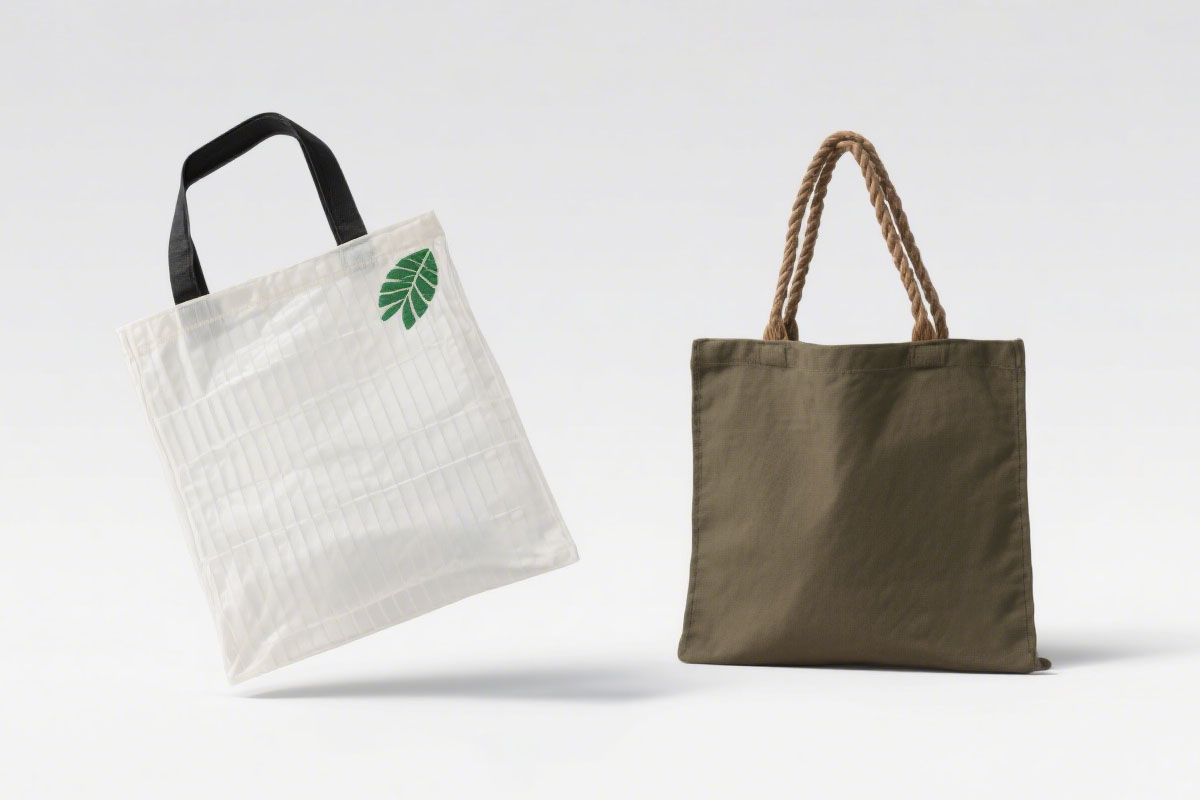
PP woven bags (polypropylene woven bags) and canvas shopping bags are two widely used portable containers, but they cater to entirely different scenarios due to differences in material, performance, and design positioning. The former is a "durability champion" for industrial and outdoor use, while the latter is a "style icon" for daily shopping and brand promotion. Whether businesses are purchasing packaging materials or consumers are choosing daily-use bags, understanding the core differences between the two is crucial for making the right choice. Below is a comparison across 6 key dimensions—including material, durability, and eco-friendliness—and answers to common questions.
Core Differences: A Comprehensive Comparison Across 6 Dimensions
1. Material Foundation: Synthetic Fiber vs. Natural Fiber
- PP Woven Bags: Made from polypropylene (PP), which is extruded and stretched into flat filaments before being woven. They belong to synthetic polymer materials, typically translucent or milky white in appearance, with a smooth surface and a slightly rigid texture. They have the typical properties of plastic fibers—waterproof and corrosion-resistant—but poor breathability.
- Canvas Shopping Bags: Mainly woven from cotton fibers (or a cotton-polyester blend), falling under natural fiber products. High-quality canvas (12oz+) has a clear texture, a thick yet soft feel, and excellent breathability, allowing moisture to dissipate quickly. However, natural cotton fibers are not waterproof; they absorb water and become heavier when wet.
- Key Distinction: The "synthetic nature" of PP woven bags gives them waterproof and corrosion-resistant advantages, while the "natural nature" of canvas provides breathability and skin-friendliness.
2. Durability: Damage-Resistant vs. Wear & Wash Resistant
- PP Woven Bags: Highly wear-resistant, capable of holding 10–20kg of weight (industrial-grade PP bags can bear over 50kg). They are resistant to oil, acid, and alkali corrosion, making them suitable for carrying heavy items like grain, chemical fertilizers, and construction materials. However, they suffer from "low-temperature embrittlement"—they tend to crack when temperatures drop below 0°C—and prolonged exposure to sunlight causes material aging. Their service life is approximately 1–2 years (in industrial settings).
- Canvas Shopping Bags: Wear resistance depends on thickness; canvas of 16oz or more can hold 5–10kg, suitable for light to medium-weight items like clothing, books, and daily necessities. Canvas is machine-washable and becomes softer with each wash. With proper care (avoiding prolonged soaking and sun exposure), it can last 3–5 years (in daily use). However, canvas is prone to tearing by sharp objects, and its load-bearing capacity decreases when wet.
- Key Distinction: PP woven bags are ideal for "short-term heavy use," while canvas shopping bags excel at "long-term repeated use for light to medium loads."
3. Eco-Friendliness: Recyclable vs. Biodegradable
- PP Woven Bags: Their advantage lies in being "recyclable"—used PP bags can be crushed and reprocessed into plastic pellets for manufacturing new woven bags or plastic products. However, they have a major drawback: slow natural degradation. If discarded randomly, they take 20–50 years to decompose in the natural environment, and their production process emits small amounts of plastic fumes.
- Canvas Shopping Bags: Their core advantage is "biodegradability"—natural cotton canvas fully decomposes in compost within 1–2 years without residual pollution. For organic cotton canvas (GOTS-certified), no pesticides or chemical fertilizers are used during production, resulting in 30% lower carbon emissions than PP bags. However, canvas has high recycling costs; damaged canvas is mostly recycled as cloth for rags or fillers, with limited reuse pathways.
- Key Distinction: PP woven bags represent "recyclable eco-friendliness," suitable for scenarios prioritizing resource circulation; canvas shopping bags represent "biodegradable eco-friendliness," ideal for brands or consumers focused on zero ecological burden.
4. Application Scenarios: Industrial Heavy Use vs. Daily Refined Use
- PP Woven Bags: Focus on "functional scenarios" such as agriculture (carrying wheat, corn), chemical industry (holding fertilizers, plastic pellets), logistics (packaging large mechanical parts), and outdoor activities (temporarily storing camping gear, wet clothes). Thanks to their waterproofness, they are also used for temporary storage in rainy weather, but their plain appearance makes them rarely used for daily shopping or brand promotion.
- Canvas Shopping Bags: Focus on "lifestyle and branding scenarios" such as supermarket shopping, short commutes, brand promotions (printed with logos as gifts), and cultural events (exhibition souvenirs). High-quality canvas supports customization via embroidery, screen printing, and other techniques, boasting high aesthetic appeal and texture. They serve as "mobile advertisements" for brands, suitable for retail, catering, and cultural and creative industries.
- Key Distinction: PP woven bags address "practical needs," while canvas shopping bags balance "practicality and brand value."
5. Customization & Appearance: Simple Printing vs. Diverse Designs
- PP Woven Bags: Limited printing options, only supporting flexographic printing or simple screen printing. Due to their smooth surface, ink adhesion is weak, so they are only suitable for single-color, simple logos or text (e.g., "50kg Rice," "Organic Fertilizer"). Color choices are limited (mostly basic colors like red, blue, and black), with an industrial-style appearance.
- Canvas Shopping Bags: Compatible with various customization techniques, including screen printing (multi-color patterns), embroidery (3D logos), and heat transfer (photo-quality designs). Cotton fibers have strong ink absorption, ensuring clear and long-lasting prints. A wide range of colors is available (from natural off-white to Morandi tones), and details like webbing and snap buttons can be added, offering far greater design flexibility than PP woven bags.
- Key Distinction: Customization for PP woven bags is "functional enough," while customization for canvas shopping bags "pursues refinement."
6. Cost & Cost-Effectiveness: Cheap Short-Term vs. Economical Long-Term
- PP Woven Bags: Low unit price—bulk purchases (1,000+ units) cost only $0.15–$0.6 per bag, suitable for one-time or short-term use (e.g., logistics packaging). However, their low reuse rate (mostly one-time use in industrial scenarios) means frequent restocking is required, leading to rising total costs over time.
- Canvas Shopping Bags: Higher unit price—basic models (12oz canvas) cost $0.9–$2.4 per bag, while customized models (embroidery + multi-color printing) cost $2.4–$4.5 per bag. However, their high reuse rate (over 100 uses in daily scenarios) and ability to enhance customer goodwill as brand gifts result in higher long-term cost-effectiveness.
- Key Distinction: PP woven bags are suitable for "short-term low-budget needs," while canvas shopping bags are ideal for "long-term value-oriented needs."
About Gahumi
Founded in 1994, Gahumi is a comprehensive fabric-printing enterprise integrated with product R&D, design, manufacture and sales. We offer a full line of fabric-printing products, including towels, golf towels, flags, advertising T-shirts, sports items, fans’ scarves, hats & caps, and other election accessories, etc.
Based on 31 years of manufacturing experience, we have been exporting products to the US, Europe, East Asia, Africa, and the Middle East, and have established long-term partnerships with companies around the world.
With over 300 highly qualified employees and 3 manufacturing facilities covering a total area of 5,000 square meters (including a raw material center, sewing center, fully automatic printing center, and assembling center), our clients benefit from lower manufacturing costs and timely mass production for market launch.

.webp)
.jpg)
.jpg)
.jpg)
.jpg)
.jpg)

.jpg)